When I was a teenager I got deeply obsessed with the fact that minds and the people that have them might not be the same thing. I am able say I have inner experiences and know that’s true because I experience them, but I have no way of knowing if that’s true for you or anyone else. The man down the street might have no inner mind at all; the man he’s married to might have ten million, though he wouldn’t even know it because they’d all be being produced by the same brain. It’s a bit unsettling and disturbing to think about, so of course my brain leapt on it when I was young because I was unsettled and disturbed.
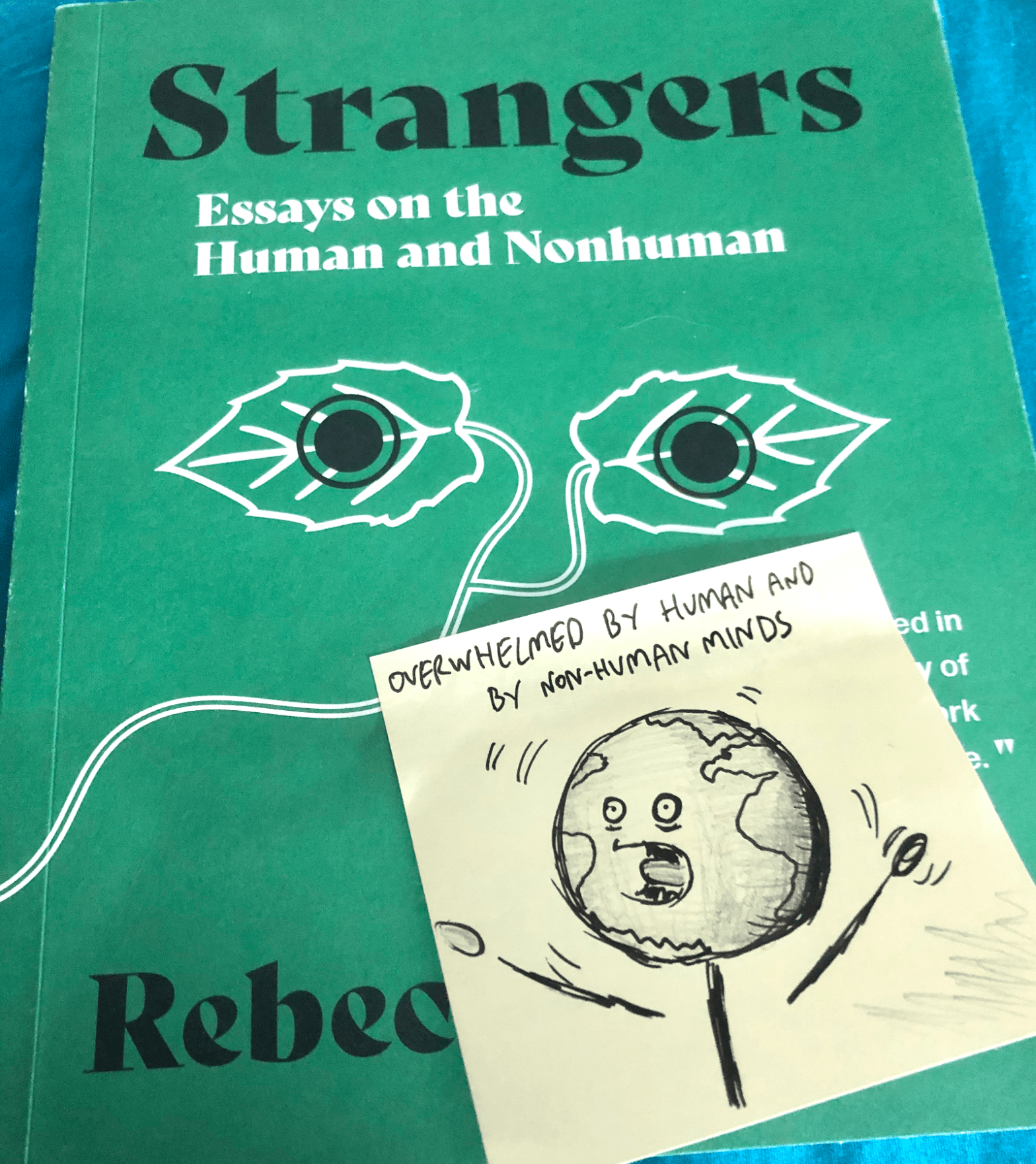
And as Rebecca Tamás says in Strangers, this collection of essays of hers from Makina Books, we have no way of knowing if anything else has experiences, either— if trees do or the wind does, or what it might mean if they do. She understands that this thought isn’t necessarily as airy-fairy as it may seem, but in fact contains horrors: if it’s possible to inflict suffering on things we didn’t even comprehend *could* suffer, suddenly it’s very hard to see how to live in an ethical way.
And this book is also full of the suffering we very much do comprehend but can choose not to see: of humans and of other animals, of maybe everything we’d say has a mind. But it also sees the beauty of minds existing at all, of not inhabiting the world alone. It sees the joy and the grief of a world that contains other people, whatever those people might happen to be. I think it’s really good, in other words. I think that you should read it.
 Robert Shepherd: Writer
Ooh, definitely going to add this to my ‘to read’ pile Robert. Thanks.
LikeLike